The short version
- Japan imports about 70% of the wine it drinks, and since 2019 EU wine enters fully tariff-free. That is a structural advantage worth using.
- Around 250 importers, concentrated in Tokyo and Osaka, and precise in their questions. They ask about soil and elevation before they ask about price.
- Trust, continuity and relationship-building carry real weight. Importers are often slower to commit, and tend to stay once they do.
Contents
Japan is one of the most demanding wine markets in Asia, and one of the most interesting for a producer with something specific to say. Around seventy percent of the wine drunk there is imported, France leads by value, and the trade is precise in its questions. Importers ask about soil and elevation before they ask about price.
The direction of travel is also worth noting. In 2025, while volume eased slightly, the value of Japan's wine imports rose: the market took a little less and paid a little more. For a small producer selling on character rather than on price, that shift is a useful one.
EU producers have a quiet advantage
If you make wine in the EU, the tariff position works in your favor. Under the Economic Partnership Agreement between the EU and Japan, which came into force in February 2019, tariffs on EU wine were removed entirely and immediately, not phased in over years. Your wine arrives under the same duty treatment as the French houses that have held Japanese shelf space for decades. New World producers, by contrast, still pay duty unless their own country has struck a deal. It is worth stating plainly when you approach an importer: margins on the Japanese side are tight, and a tariff-free landed cost is a concrete argument.
How the market is built
Japan has roughly 250 wine importers and distributors. Old World wine is the default, but New World labels and value formats have gained ground, and a domestic Japanese wine scene has developed in Hokkaido, Yamanashi, and Nagano. Most of the import business concentrates in the cities, Tokyo and Osaka above all, with department-store food halls, specialist retailers, and a deep restaurant culture all part of the route to the consumer. Gift-giving seasons carry real commercial weight, which favors wines that present well and carry a story an importer or an on-trade buyer can repeat.
The importer handles the Japanese-side work, including the Japanese-language labeling applied to your bottles after they arrive, plus customs and the food-sanitation paperwork. Your role is the wine, the documentation, and the account of it that an importer can carry into the market. Precise technical sheets, accurate analysis, and a clear description of your farming and your cellar are not box-ticking here; they are the language the trade works in.
What Japanese importers respond to
Precision and patience. Trust and continuity carry weight here, and an importer will usually want evidence of both before committing. They want detail, consistency, and a producer who respects the care that goes into placing a wine. They tend to be slower to commit than in some markets and to stay longer once they do. A first order is often deliberately small, a test of the wine and of the working relationship before anything larger follows. That is not a universal rule, but it is common enough that a modest opening order is better read as a starting point than as a verdict.
Producers who approach Japan purely as a volume opportunity tend to struggle. A narrower approach usually works better: the right importer for your style, and the willingness to let a relationship build over visits and vintages.
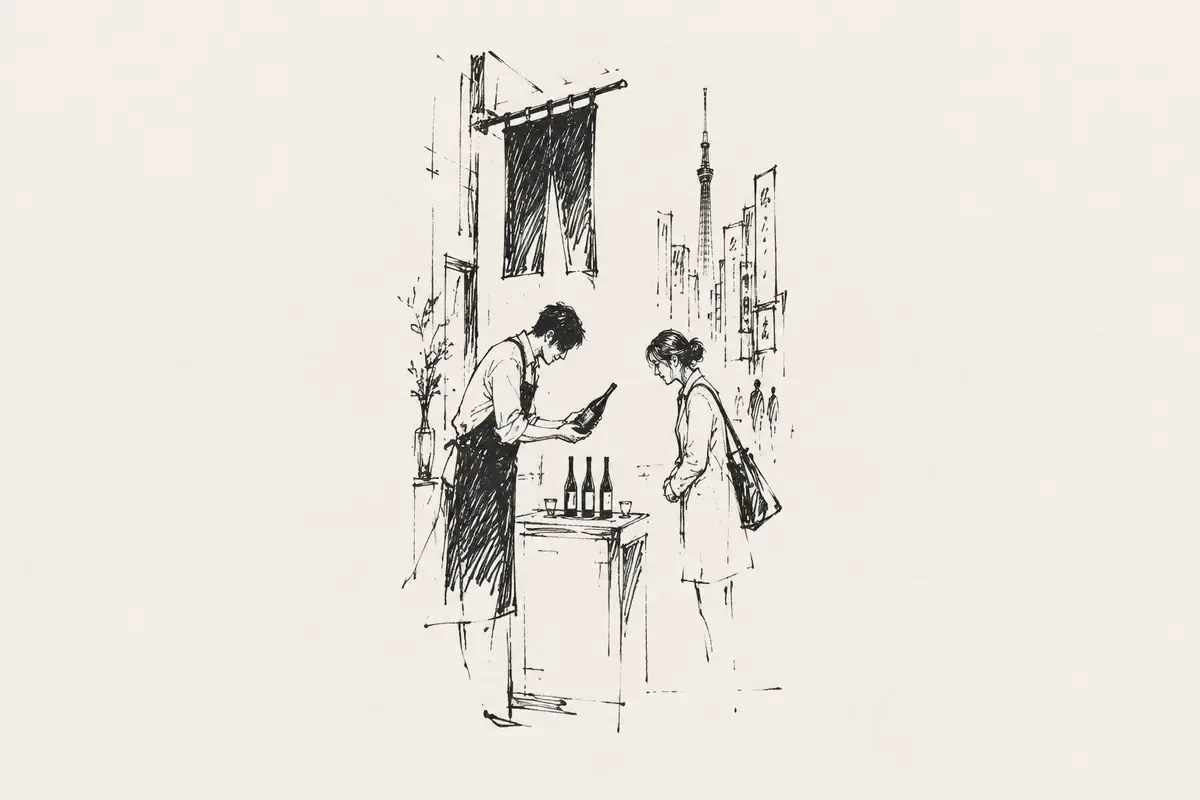
Importers ask about soil and elevation before they ask about price.
Price, format, and the first order
Japanese importers work on tight margins and think in landed yen, so a clean, tariff-free price you can hold steady across vintages counts for more than a one-off discount. A first order is commonly small and specific, a few cases of one or two wines rather than a pallet of the whole range, placed to see how the wine sells through before anything scales. The on-trade is central to that test: a sommelier pouring your wine by the glass, with the story told at the table, is often how an unfamiliar producer builds a following that then pulls retail along behind it. Continuity of supply is part of the commitment. An importer who lists you is counting on next year's wine arriving on time and showing the same hand, so reliability is itself an argument.
How to find the right importer
Start where the fit is obvious. Look at who already imports wines like yours, which a Japanese retailer's back label or a wine-pricing site will tell you, and approach importers and specialist distributors whose existing range sits next to yours in region, style, and price rather than contacting the whole list of 250. The main international and domestic food and drink trade fairs held in Japan draw those buyers specifically to find new producers, and being present, or being represented, at one is an efficient way to be taken seriously. Otherwise, a precise, well-documented direct approach to a genuinely matched importer, followed up consistently rather than once, is the next best route.
Find the importer whose range already sits close to your wines, approach them properly, and let the relationship build at the pace the market expects. Patience is part of the cost of entry here, and it is usually repaid in continuity.


